
Expository Essay: An Ultimate Guide
An Expository Essay is a kind of essay which communicates factual information. This type of writing is used to explain a specific kind of concept and split the information to a broader audience.
It depends on different structures. “Expository” means to describe something. It’s a type of writing where you place facts and observations in the most effective way as possible. This can be accomplished with the help of definition, examples, comparison and knowledge of causes and effect.
The Purpose Of Expository Essay
The clear purpose of Expository writing is to provide a clear focused explanation of a specific topic. Expository is designed to carry facts that provide insight into a character or advances the story. It requires the person to look into an idea, analyse evidence, and present a proper thesis with a clear and concise manner. The expository essays depends on the writer’s research to support the statements of the thesis. The purpose of the essay is to present a coherent argument which are believable and reasonable in response to a question. The writer has to convince the reader by his reasoned response supported by evidence from the analysis and research which is done.
Types Of Expository Essay
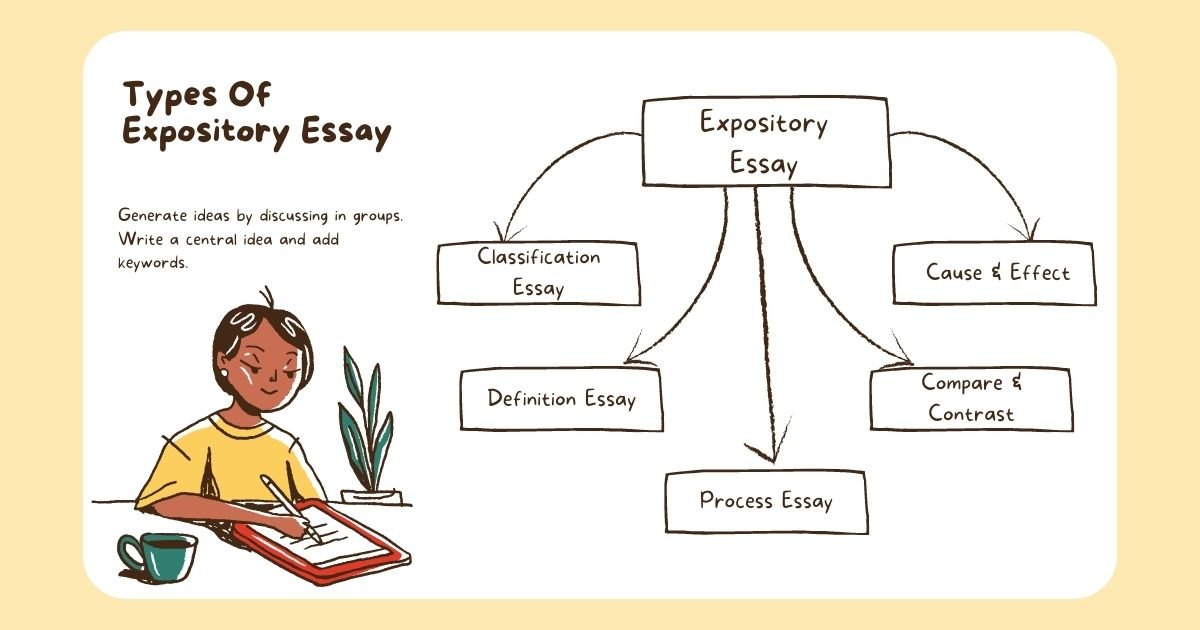
There are five types of expository essays
1. Classification Essays
In classification essays, you have to write about the various subjects within a single category. The easiest way to explain a classification essay is that it is a formal kind of writing to showcase your skills. The writer has to decide the criteria for classification and must be able to explain your reasonings.
2. Definition Essays
A definition essay defines its subject by giving clear facts about it. In this essay the writer has to explain the word due to its historical and cultural understanding. It provides a clear and comprehensive definition, often supported with examples and explanations to enhance understanding.
3. Process Essays
Process essays give a step-by-step procedure in order to educate the reader how to do something. Each body paragraph is a unique step on its own in the process, then the conclusion tells what the reader should have gained.
4. Compare and Contrast Essays
In compare and contrast essays the writer supports its contention by examining the differences and the similarities between the sources mentioned. It helps you understand the subjects better by looking at their characteristics and figuring out their connections and importance.
5. Cause and Effect Essays
As the name indicates, a cause and effect essay gets into how specific actions caused others to occur. This essay is a piece of formal writing where you discuss the events that in succession cause other events to take place.
How to structure an Expository Essays?
There’s no specific length your essays need to have. Unless you have instructions to hit a certain word limit.
It follow the same basic structure used within every assignment:
- Introduction– Introduction part of the essay helps to present the topic. It gives the basic valid info. The writer gives the thesis statements and facts regarding the topic.
- Body paragraphs– Body paragraphs are all the paragraphs that come between the introduction and the conclusion. Body paragraphs are always presented in the middle of the essay. A strong body paragraph supports the thesis statements.
- Conclusion– The conclusion is the chance to have last points on the subject. You should begin the conclusion by restating your points. The final result should also contain a revelation of a deeper truth.
How do you write an Expository Essay
There are five Steps, Which are in the Following ways:
Step 1: Pre-write or Pre-Analysis
To write a well structured essay it’s important to analyse some important points and perform research about that. Write in the third person form to ensure that you don’t accidentally state your own personal opinions.
Step 2: Introduction Paragraph
Your starting paragraph should include the topic that clearly states the main points of the essay. It is supposed to grab your reader’s attention. The intro paragraph is the chance to provide just enough information to the reader.
Step 3: 3 Body Paragraphs
The body paragraphs of the essay should focus on its own definite issues. Each paragraph should have its own points and facts. Their points should not be merged.
- Firstly explain the topic sentence in the starting.
- Then the writer should introduce the evidence.
- Insert the evidence and unpack it.
- Evidence should be explained.
- Concluding sentence should be inserted.
Step 4: Conclusion Paragraph
The concluding paragraph is always presented at the end. It should only contain the facts and points mentioned above in the essay. In the conclusion paragraph, just summarize the supporting points from body paragraphs and bring it to a close.
Step 5: Revision
As it’s completed, re-read the essay and double check the content. Cross out the necessary words. Lastly, check the grammatical errors and word choices. After everything has been corrected, re-read the whole essay.
Examples of Expository Essays
Some of the most common examples of expository writing include academic related essays, articles of magazines and scientific reports. An expository essays could be an explanatory essay on how to operate a particular machine, any historical event that took place in the past or elaboration of any scientific phenomenon. Any essay that educates the individual about how things work rather than imposing a point of view on the reader is an expository essay.
A few brief examples of expository essays are :-
“THE BENEFIT OF EVERYDAY WORKOUT”
| Regular exercise has different benefits for both physical and mental health. Working out can help improve cardiovascular health, increase muscle strength, and reduce the risk of chronic ailments such as diabetes and heart disease. Additionally, exercise can also improve mood, reduce stress levels, and boost cognitive function. Whether it’s a brisk walk or a high-intensity workout, inculcating regular exercise into your everyday schedule can have a positive impact on your overall wellness. |
“THE IMPORTANCE OF SLEEP“
| Sleep is essential for maintaining great health and well-being. Getting enough sleep helps to maintain hormone levels in the body, boost immune system functions, and improve our cognitive function. Most importantly, sleep deprivation can lead to a range of unhealthy effects, including decreased productivity, increased stress levels, and a higher risk of accidents and injuries. By giving importance to good sleeping habits, such as sticking to a consistent sleep schedule and making a relaxing sleep ambience, individuals can improve their overall health and well-being. |
.“UNEMPLOYMENT AS A SOCIAL PROBLEM IN INDIA”
| Unemployment is a serious problem among today’s generation. There are thousands of people who don’t have work to do and they cannot even find work for themselves. Unemployment is a situation when a person wants to work but cannot find employment in the labor market. One of the main reasons for unemployment is the large population of India and the limited resources. There is high scope for improvement in the unemployment sector. With better plans and strategies, the employment level can be improved. |
Here are some more Examples provided Below: